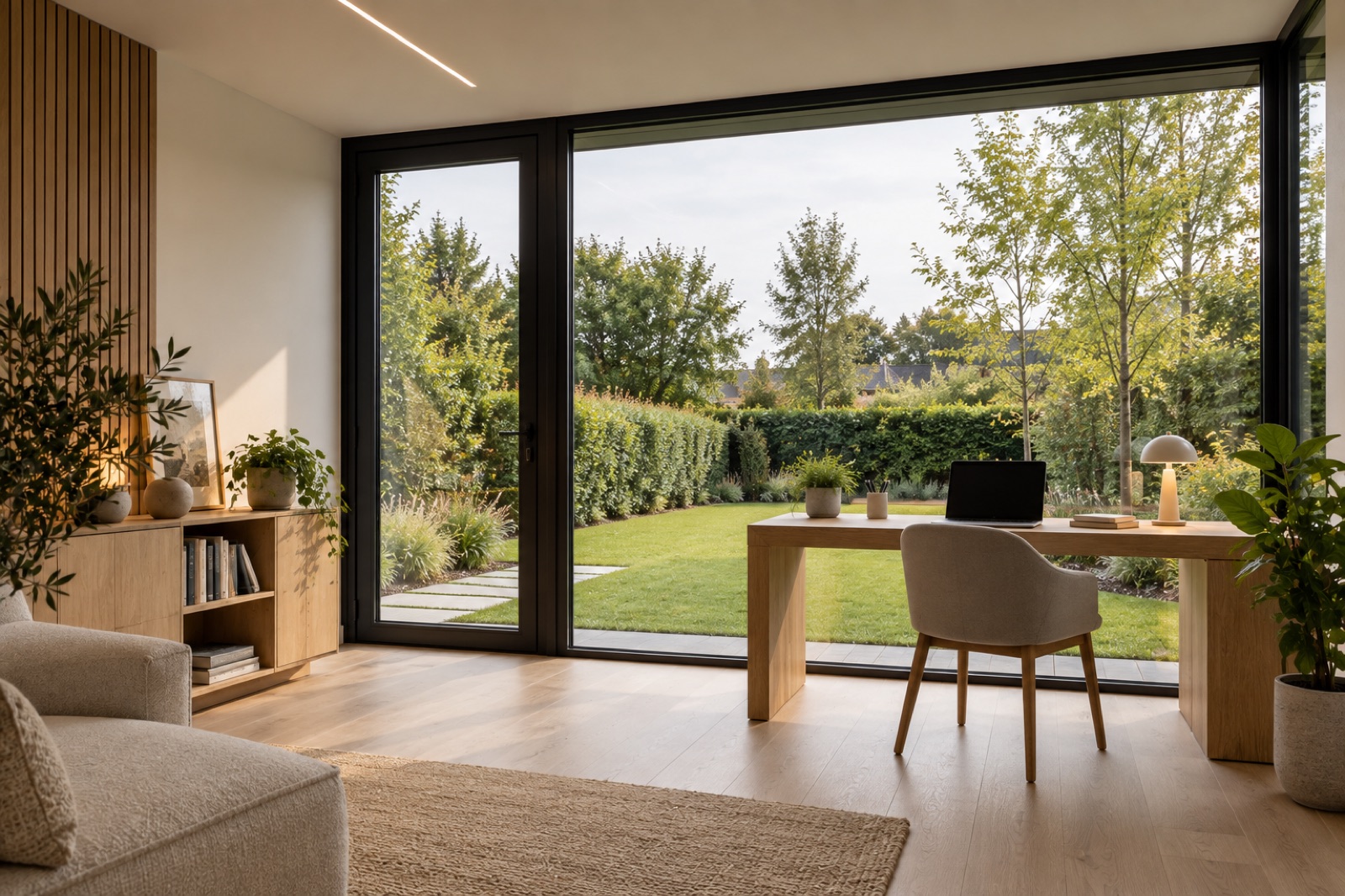



A garden office you can still use in January.
An office, a studio, a gym, a room for guests or a sauna. Built on the same galvanised frame as our houses and insulated like a house wall, so it holds its heat instead of leaking it. Two weeks from the piles going in, and the lawn survives.
Screw piles, so no concrete lorry and no trench across the garden
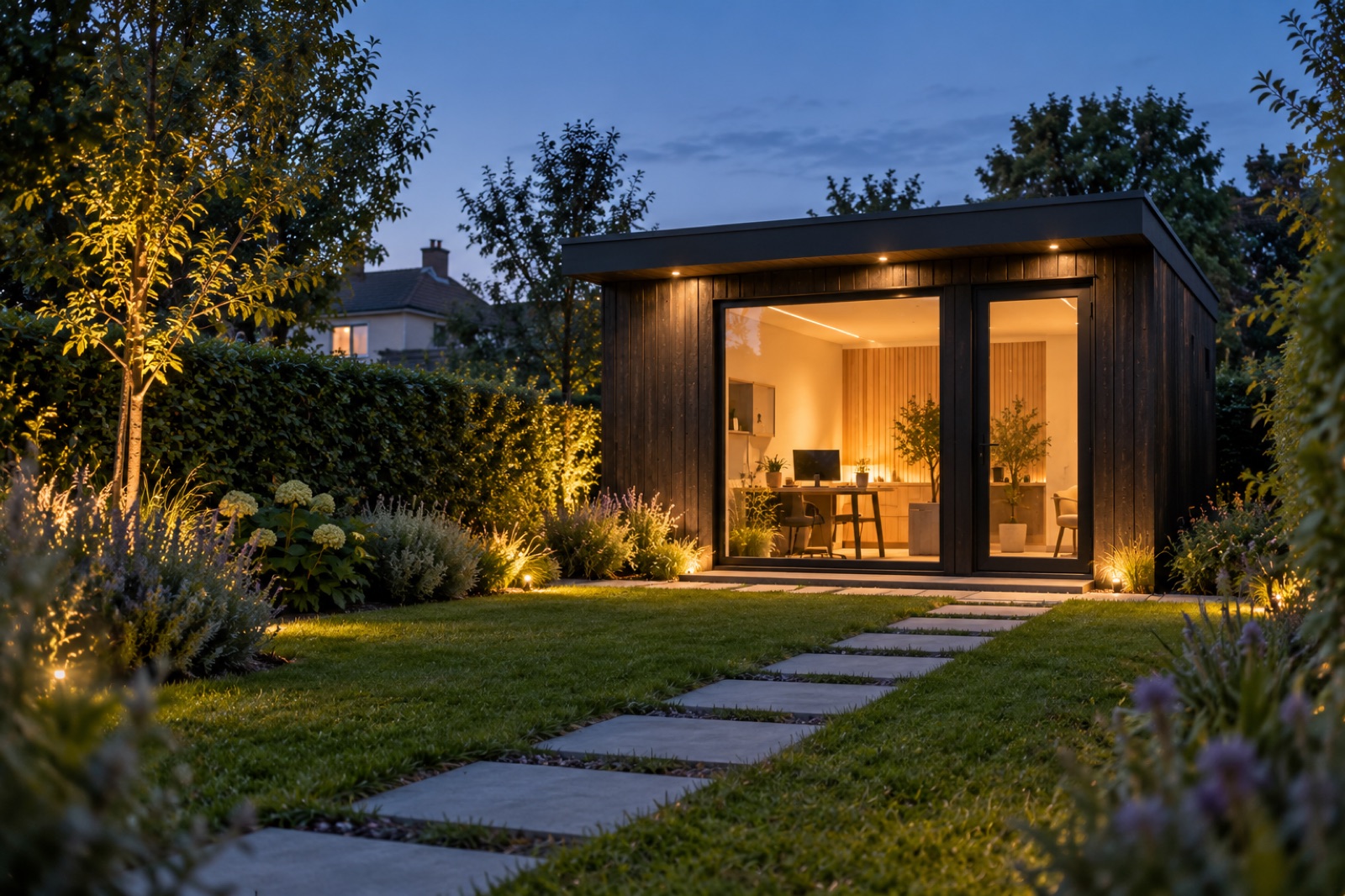
Everything follows from what you will do in there.
A gym and a guest room are not the same building with different furniture. The insulation, the heating, the wiring and, above all, the paperwork all change. Answer four questions and the spec writes itself.
The rule is different in every country and sometimes in every town, so read the last line as the shape of the answer rather than the answer. We check yours against the local office at the survey and put it in writing before you order anything.
Most garden offices are a shed with forty millimetres of foam in the wall.
Lining board, a thin layer of foam, and a frame that is doing well to be straight. It is pleasant in May and unusable in November, and by then the money is spent. Here is what ours is made of instead, drawn to scale and changing with the spec you built above. Point at a layer to see what it is doing.
- Insulation between the steel and again outside it, so the frame is not a line of cold running through the wall
- An airtight layer on the warm side, taped, which is what actually stops the heat leaving
- A ventilated gap behind the cladding, so rain that gets past the boards runs out again
- Galvanised steel that cannot rot, warp or be eaten
Four steps, and the garden stays a garden.
We walk the garden
Where it can stand, how far from the fence the office allows, which way the glazing should face, and how we get materials down the side of the house without taking the gate off.
Drawing, permit, price
A drawing, the answer about the paperwork in writing, and a fixed price. If it needs a permit we say so here and we handle the application.
Piles in a morning
Screw piles go in with a small machine. No digger, no trench, no concrete lorry, and the lawn closes over within a season.
Two weeks and a key
Frame and roof in two days, then the cladding, the glazing, the wiring and the inside. We leave with the grass raked and the door locking.
What people ask before they order.
Do I need a permit for a garden room?
It turns on three things: the floor area, how close it sits to the boundary, and whether anybody is going to sleep or wash in it. A small uninsulated store away from the fence is usually a notification or nothing at all. Once there is a bed, a shower or a drain, it starts to count as habitable floor area and a permit is the normal answer. We work yours out at the survey and put it in writing before you order anything.
Can I use it through the winter?
Yes, if it is built for it. The wall is a proper build up with insulation between and outside the steel, an airtight layer and a ventilated cavity behind the cladding, which is why it holds heat rather than leaking it. One electric panel heats a small office through a cold week. A shed sold as a garden office usually has forty millimetres of insulation and is unusable from November.
What about foundations?
Screw piles in most gardens. They go in within a morning with a small machine, take load straight away, and leave the lawn intact. If the ground is poor or the fall is severe we pour a small slab instead, and you see which one it is on the drawing.
Can it have water and a toilet?
Yes, and it is worth deciding early. Drainage is usually what moves a garden room from a notification into a permit, and running a supply and a waste to the end of the garden is straightforward while the ground is open and awkward once the grass is back.
How do you get the materials down the side of the house?
By hand, in pieces. Light gauge steel comes in sections a person can carry, which is the quiet advantage of it for back gardens. No crane, no lorry on the lawn, and no taking a fence panel out unless you want us to.
Will it still be there in twenty years?
The frame will. Steel does not rot, warp or get eaten, and it is galvanised before it is cut with every cut end treated after. What you will replace one day is the cladding, and only because you want a different colour.
Send us a photograph of the garden.
One picture from the back door and roughly how far it is to the fence. That is enough for us to come back with a drawing, a straight answer about the paperwork and a fixed price.